
Underdiagnosis of Sleep Apnea: What You Need to Know
So many of our body’s critical functions depend on getting a good night’s rest. In fact, sleep is an essential part of maintaining healthy brain function and overall physical health. When we don’t get enough or have poor quality sleep, it increases risk for heart and respiratory problems, affects metabolism, and can impact thinking and focus.
For this reason, one of our study’s priorities is to better understand sleep patterns, issues, and any potentially related health concerns that former NFL may experience, which is why we conducted a recent study published in the journal Neurology, co-authored with researchers across Harvard University, Emory University, and Vanderbilt University Medical Center. We are specifically interested in sleep apnea, a disorder characterized by airflow interruption and/or reduction. When your breathing stops and starts many times while you sleep, it can prevent your body and brain from getting enough oxygen. Those with sleep apnea often report disruptive symptoms such as snoring, gasping, or choking while sleeping.
An Undiagnosed Condition
It’s important to know that close to 80% of the general population who have sleep apnea are actually undiagnosed. Those with untreated sleep apnea may experience:
- Difficulty with focus or memory
- Daytime sleepiness, fatigue, feeling unrested
- Falling asleep during passive activities (e.g., watching television, sitting quietly)
- Morning headaches
Over time, untreated sleep apnea can lead to low testosterone, heart disease, depression, cognitive dysfunction, and other conditions sleep apnea has been associated with.
Not everyone is at equal risk for sleep apnea. Common risk factors include:
- Being male
- Having high blood pressure
- Age older than 50
- A neck size larger than 16 inches
- A body mass index (BMI) over 35 kg/m2
- Exposure to head injury
The sections below report on our recent findings related to sleep apnea among former NFL players. You will also find some action steps and resources to help you be proactive about your sleep and health.
What We Measured
Our study surveyed 1951 former NFL players, asking whether they had ever been told they had sleep apnea and if yes, whether they used a continuous positive airway pressure (CPAP) machine, a treatment for sleep apnea. We used a sleep apnea screening tool called the STOP-BANG that poses questions about eight common risk factors. Finally, we collected information about symptoms of pain, depression, anxiety, and cognitive symptoms among men with, without, and at-risk for this condition.
Our Results
-
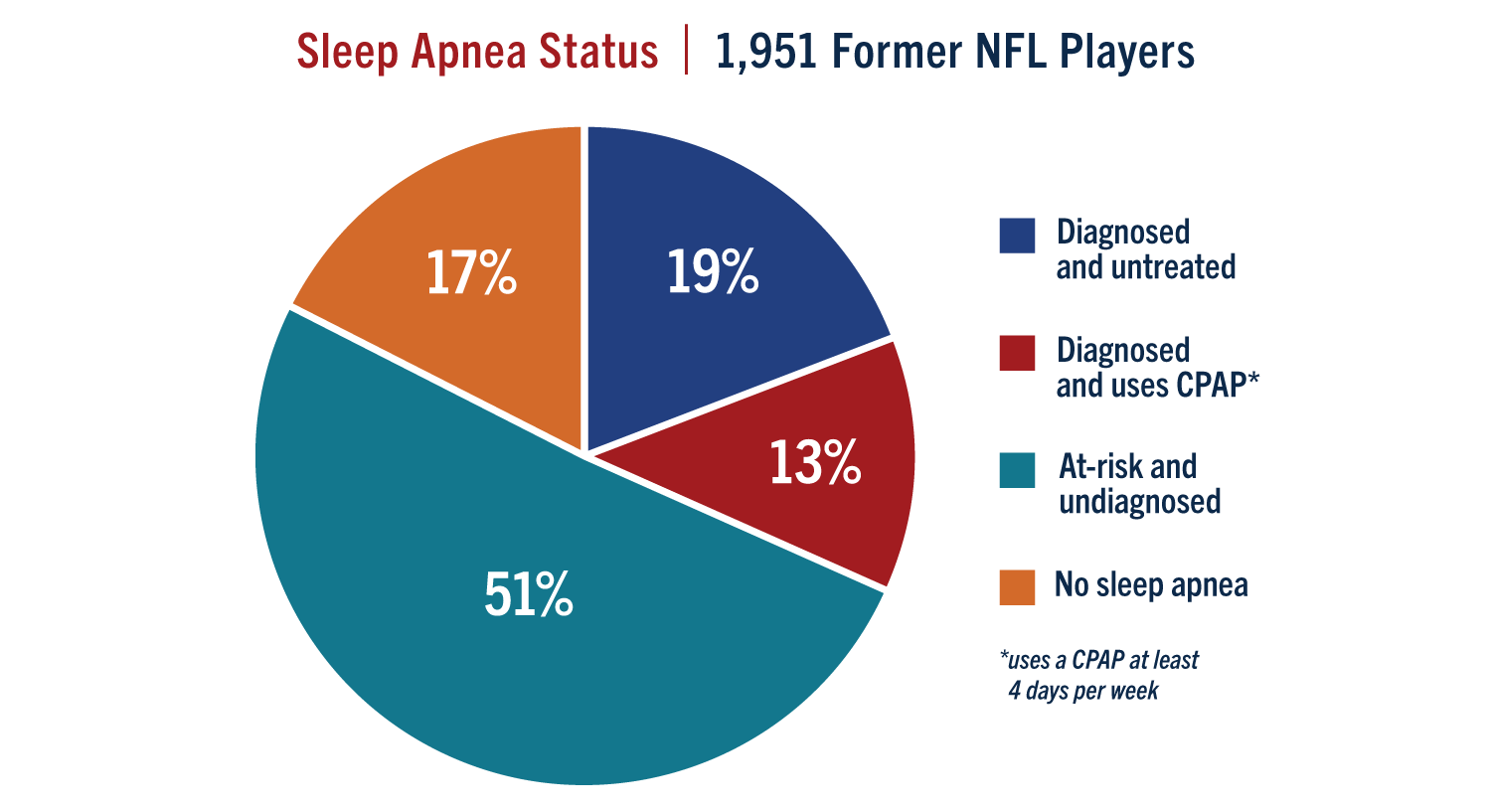
- More than 31% of former players reported already being diagnosed with sleep apnea.
- According to the validated screening tool used by our researchers, nearly 1,000 additional players (51%) were found to be at an intermediate or high risk of sleep apnea, even though they were not given an official diagnosis.
- Although not everyone who screens positive will have sleep apnea, our findings suggest that the actual percentage of former NFL players with this condition may be closer to 69%.
- Former players who reported more head injuries were more likely to report sleep apnea, even after considering other risk factors.
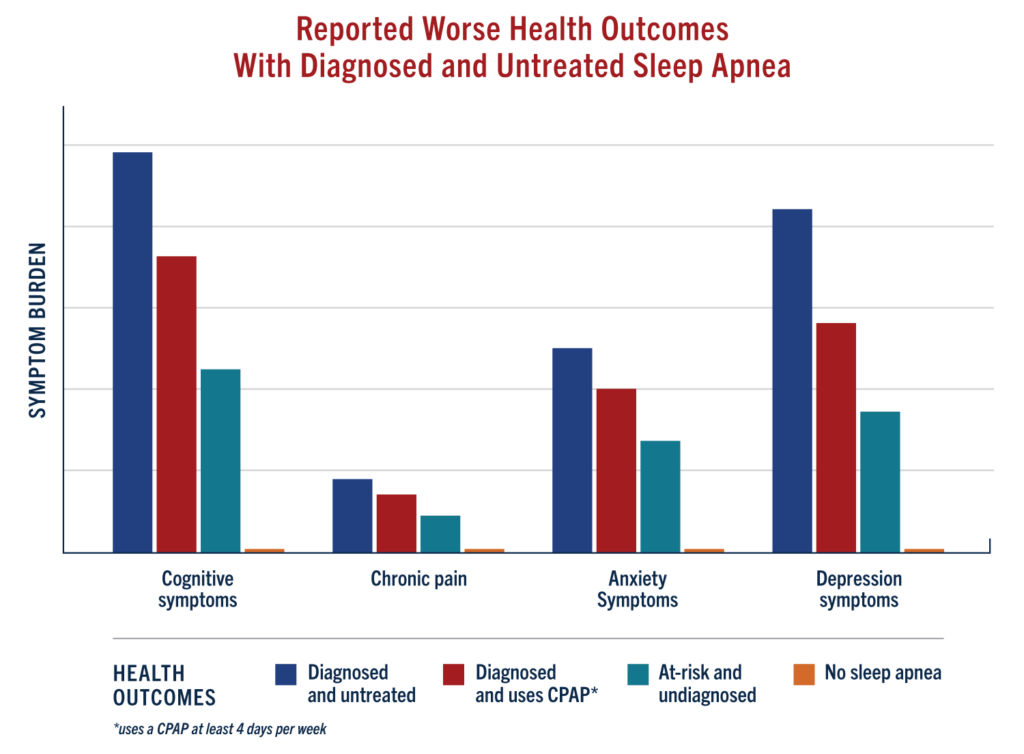
- Players with diagnosed but untreated sleep apnea reported the highest high levels of depression, anxiety, pain, and cognitive difficulties.
- Fewer than 40% of players with diagnosed sleep apnea reported regular use of prescribed positive airway pressure (PAP/CPAP) therapy.
Potential Action Steps
If you have any concerns about your sleep or think you may have sleep apnea, reach out to your medical care provider for testing. If you need to find a primary care provider (PCP), please visit health.gov to learn how to find a provider.
- Sleep apnea is common and treatable health conditions that can negatively impact mood. If you think you may be experiencing depression or anxiety, talk to your doctor about these concerns and how you can address them. If you need to speak with someone immediately, contact the NFL Life Line, (800) 506-0078.
- Sleep apnea is associated with cognitive symptoms such as difficulty with memory and focus. If you think you may be experiencing symptoms of cognitive impairment, talk to your doctor about getting a comprehensive neurocognitive evaluation. With proper diagnosis and management, people with cognitive impairment can live happy and fulfilling lives.
- There are other ways to maintain and improve your cognitive health. In addition to getting good-quality sleep, regular exercise and maintaining a healthy diet and weight are all known to enhance cognitive function. Continually challenging your brain to stay active and learn new skills is also known to positively impact cognitive health. If you would like to learn more about specific techniques and strategies for enhancing cognitive health, contact us for a copy of Harvard’s Guide to Cognitive Fitness or consult your physician.
Whether or not you have sleep apnea, you can still be proactive about your sleep, cognitive, and mental health now. Below are some tips to protect your sleep:
Improve Your Sleep Hygiene
- Anchor your wake time: stick to a regular sleep schedule
- Create a wind-down routine to set your body up for sleep
- Optimize your environment: sleep in a cool, dark room, limit screen time 20 minutes before bed, wear dedicated sleep clothes
Reduce your Risk of Poor-quality, Interrupted Sleep
- Sleep on your side
- Avoid alcohol and tobacco
- Maintain a healthy weight
- Exercise
Treatments Exist to Improve Sleep
- Continuous positive airway pressure () machine
- Surgical procedures
- Oral devices
- Topical nasal steroids
Additional Support
NFL Life Line: A free, independent and confidential phone consultation service available to former players and their families 24 hours a day, 7 days a week. The service is designed to help individuals with any mental or physical health matters that they need support on, and to connect them with the resources they need. The Life Line is run by professionals who are trained to assist individuals experiencing personal or emotional crises. Contact: (800) 506-0078.
Players Assistance & Counseling Services: This benefit provides eligible former players and their families with up to eight free counseling sessions a year for matters ranging from family/marital concerns to depression. Contact: (866) 421-8628
The Trust: Information on Depression: This resource provides an overview of depression symptoms and treatments, as well as resources to help former players experiencing depression.
NFLPA: Myths about Depression and Anxiety: This resource discusses and debunks common myths about depression and anxiety.
If you have questions about the information above, please contact us directly. We welcome your questions and feedback.