
Recent Trends in Deaths by Suicide Among NFL Players
Note to readers: This Results Return discusses sensitive topics, including depression, suicide, head injury, neurodegenerative disease, and chronic traumatic encephalopathy (CTE).
Suicide is a leading cause of death in the United States and has long-lasting effects on individuals, families, and communities. It is also considered one of the most preventable causes of death.
Among professional athletes, it is important to note that several studies have consistently found that National Football League (NFL) players and other professional athletes (e.g., Major League Baseball [MLB]) have lower suicide rates than the general population. However, comparisons with the general population can be problematic because there are so many differences (e.g., history of physical fitness, access to financial resources, and healthcare) between professional athletes and non-athletes.
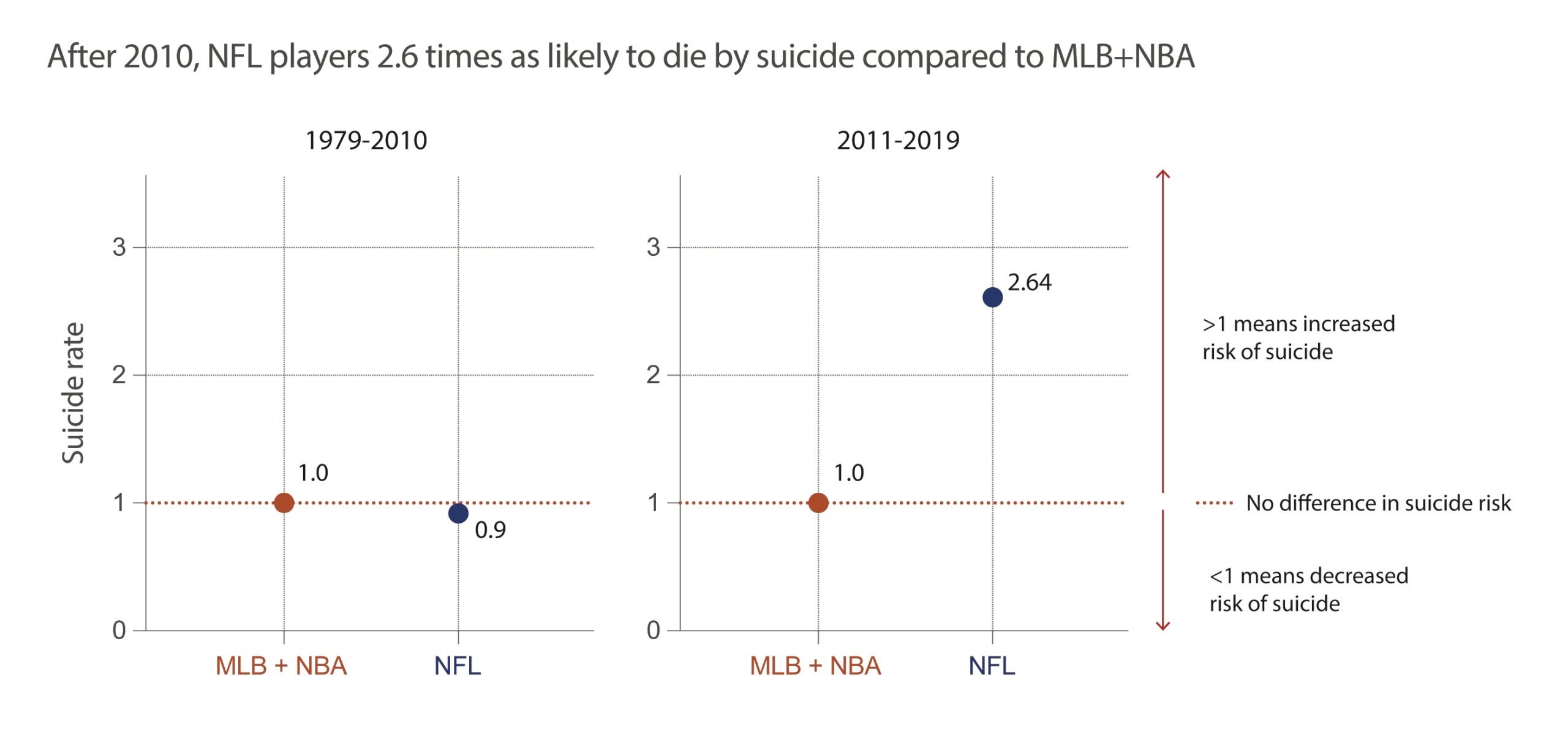
Therefore, researchers often conduct studies that directly compare professional athletes from different sports because they tend to have more in common with each other than non-athletes. A recent study by members of the Football Players Health Study that considered deaths between 1979-2019 among all NFL, MLB, and NBA players found equivalent suicide rates among professional athletes (MLB, National Basketball Association [NBA], and NFL) up until 2010. Importantly, this study also found that the rate of suicide among NFL players compared with MLB and NBA athletes rose sharply after 2010.
Summary of Study Results
- When all years between 1979 and 2019 were combined, there was no difference in the rate of death by suicide among NFL players when compared with the MLB and NBA players.
- However, when we split the study period into two time periods, a different story emerged.
- Prior to 2011, suicide rates among all three athlete types were similar.
- In contrast, during the time period between 2011-2019 we saw a 2.6-fold higher rate of death by suicide among NFL players when compared with the other two professional sports.
What Might Contribute to This Finding?
Data from this study cannot definitively explain why there has been a recent increase in suicide among NFL athletes. Many different factors including the following may contribute:
- Public and scientific conversations about football players, brain injury, neurodegenerative disease, and CTE began to increase markedly in 2011. CTE is a real condition that can only be identified after someone passes away.
- While symptoms of CTE among living former players remain incompletely understood, players experiencing trouble with memory, concentration, or mood may attribute these to CTE.
- Because CTE is considered an incurable progressive condition, men who are told or who come to believe they have CTE may be at higher risk for suicide, as suggested by a prior study.
- High-profile suicides may have produced a “copycat” effect (called the “Werther Effect”) that could have increased suicidality in others.
- De-stigmatization of suicide among NFL players and changes in medical examiners’ evaluation of suicide occurrence after 2010.
- Larger societal changes including increased isolation, financial hardship, fewer social ties, and use of social media.
What This Means for You
Some former players may have underlying brain changes associated with CTE. However, there are also other conditions commonly found in former NFL players that may result in symptoms frequently attributed to CTE, but that are treatable. Symptoms like difficulty with memory and concentration, mood swings, irritability, and confusion can be caused by sleep apnea, chronic pain, use of prescription pain medication (e.g., opioids), hypertension, diabetes, obesity, and more.
While these conditions can lead to a decline in cognitive function, managing or treating them has been shown to improve cognitive health and mood in measurable ways. Whether the symptoms players are experiencing are eventually tied to CTE or not, it is important that healthcare providers screen for health issues that can be treated and managed right now, and former players and their caregivers should talk to their medical providers about these issues.
Resources
While there is still much we do not understand about suicidality among former NFL players, there are still actionable steps you can take today to support and safeguard your mental and physical health in positive ways.
Below are some steps former players can take when discussing symptoms with their physicians, as well as other resources for improving cognitive health today.
- Speak to your doctor about your pain and/or musculoskeletal symptoms, heart, brain, and hormone health, and your sleep. Lifestyle changes (e.g., exercise, diet) and medications can improve your health. Use our checklist designed specifically for former players to use when speaking with your healthcare provider.
- NFL Life Line is a free, independent and confidential phone consultation service available to former players and their families 24 hours a day, 7 days a week. The Life Line is run by professionals who are trained to assist individuals who are seeking resources for mental or physical health concerns or who are experiencing personal or emotional crises. Call (800) 506-0078 or visit their website to chat with a trained counselor.
- NFL Work/Life Resources provides up to eight counseling sessions to players and their family members through Cigna. Sessions can be used for a variety of player concerns around mental health, relationships, and more.
- Silence The Shame is a grassroots nonprofit organization focused on destigmatizing mental health, particularly within high-stress communities. Their mission is to empower and educate communities about mental health and wellness. Their mental health resource directory can be found here.
- The National Alliance on Mental Illness (NAMI) is an alliance of community affiliates that works to raise awareness about mental illness and provide resources and support. Their education and support library can be accessed here.
- Strong personal networks can have positive benefits for your health. Your social calendar isn’t the only thing that gets a boost when you stay connected with your friends and family. Being in touch with those in your personal network may enhance your health and theirs. Reach out to a loved one, send a message to a good friend to say hello, or set up a video chat with former teammates.
- For caregivers:
- The Sharegiving Secret is a podcast that provides practical advice so that caregivers don’t have to go through their experience alone. Episodes include resources from service providers and experienced family caregivers to help provide support.
- Finding New Tomorrows is a national organization providing caregiving, Alzheimer’s, and aging well resources. Find resources on caregiving, dementia, and Alzheimer’s here.